1
Gravity separation
The treatment chamber first retains free-floating hydrocarbons by gravity separation, ahead of the sorbent stage.

Cities and utilities manage two hard problems at once: keeping stored water from evaporating away, and keeping contaminated runoff out of the watershed. WaterPearls hold the stored water. RHST's remediation system, field-demonstrated at the Chambly Canal in Québec, treats the hydrocarbon-contaminated runoff and needs no power to do it.
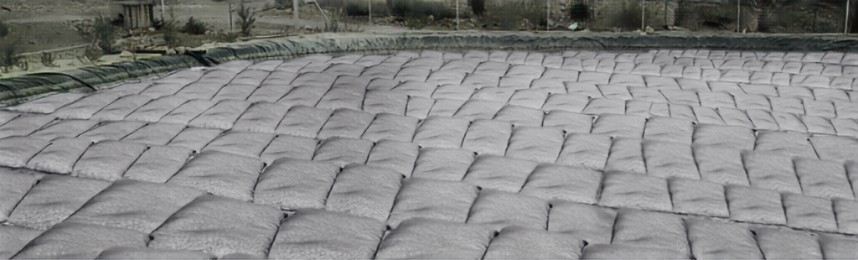
Open municipal reservoirs and irrigation storage lose a large share of their water to evaporation. Reservoir evaporative loss is estimated at about 20% of global annual water consumption (Zhao et al., 2022). A floating layer of WaterPearls suppresses that loss without pumps, power or moving parts.

Runoff from roads, yards and industrial sites carries fuels, oils and other hydrocarbons into storm systems and downstream waters. RHST has demonstrated a treatment system in the field that intercepts, retains and biologically degrades petroleum hydrocarbons before they reach receiving waters. It needs no power, and the sorbent media works in place instead of being swapped out and discarded.
The treatment chamber first retains free-floating hydrocarbons by gravity separation, ahead of the sorbent stage.
RHST Reusable Hydrocarbon Sorbent (RHS) beads rapidly adsorb hydrocarbons from the water through their engineered superhydrophobic surface, capturing and concentrating them for maximum biological activity.
Naturally occurring bacteria digest the hydrocarbons retained on the bead surfaces. They destroy the contamination on site, so used sorbents don't leave the site as hazardous waste.
RHST's hydrocarbon remediation technology, which runs without power, was deployed under a Government of Canada innovation demonstration project conducted for Parks Canada and Public Services and Procurement Canada at the Chambly Canal National Historic Site. The system intercepted petroleum hydrocarbons migrating toward the canal through stormwater drainage from a heating-oil-contaminated property. It replaced absorbent booms that required frequent replacement, continuous maintenance and disposal as hazardous waste.
Results are drawn from independent laboratory monitoring, documented in the project's final report (2020). They reflect performance observed during the project; no endorsement by Parks Canada or the Government of Canada is implied.
The treatment process fits inside the storm drains a city already owns. A cast-iron half-bell inserted into the manhole divides the water column: runoff enters on the upstream side, lighter-than-water fluids separate out by gravity, and the water flows under the half-bell toward the main collector.
The first minutes of a rainfall carry the heaviest hydrocarbon load off roads and pavement. WaterPearls are oleophilic, so hydrocarbons attach to the bead surface on contact: the load carried by that first flush is captured and held in the first compartment rather than passing through with the flow.
Unlike liquid-phase separation units, the hydrocarbons are bound to a solid surface and retained on site, where naturally occurring bacteria degrade them.
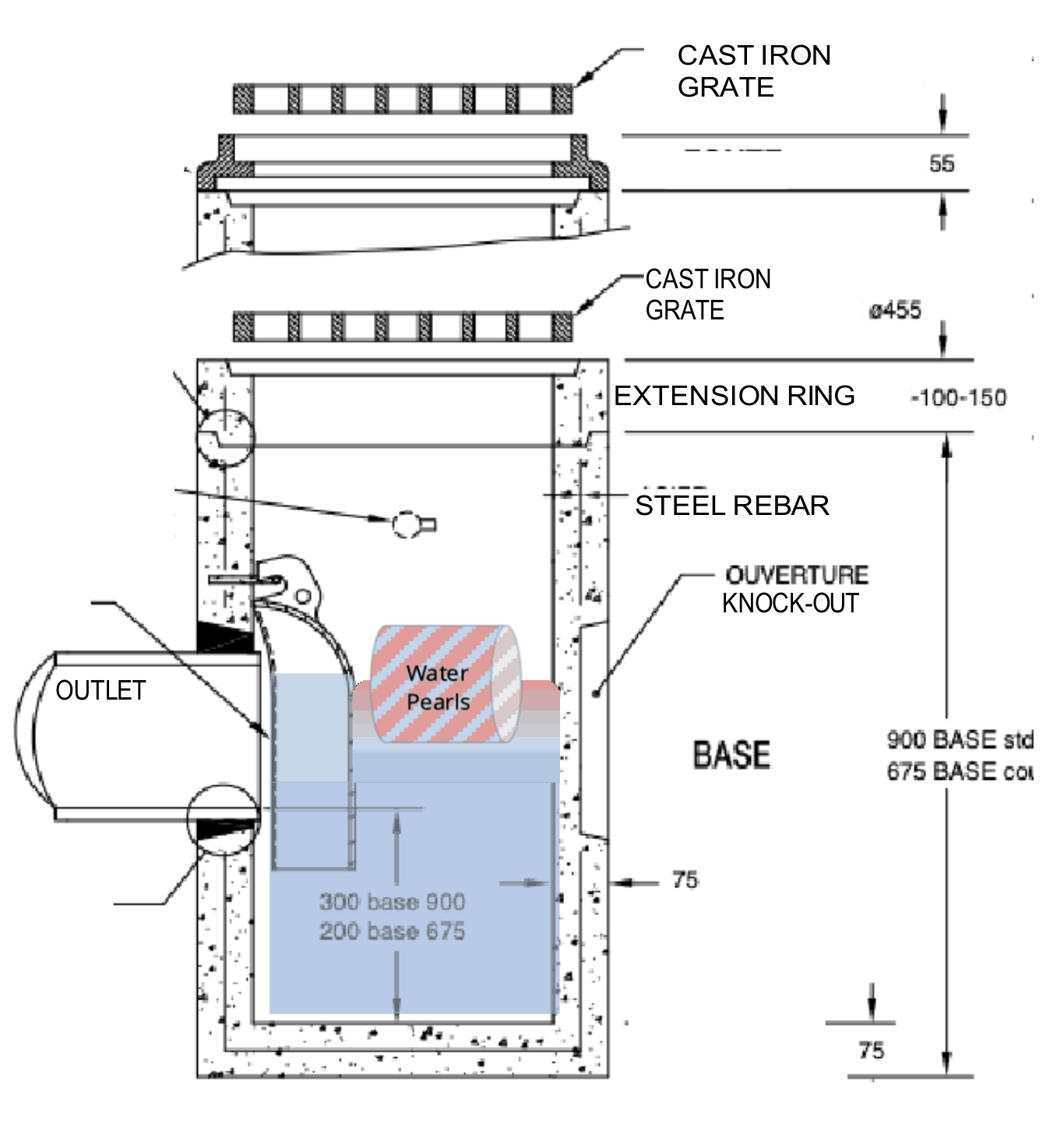
In the field, the unit sits below the grate and treats what each storm brings. Laboratory monitoring of the treated effluent confirmed compliance with the applicable discharge criteria.
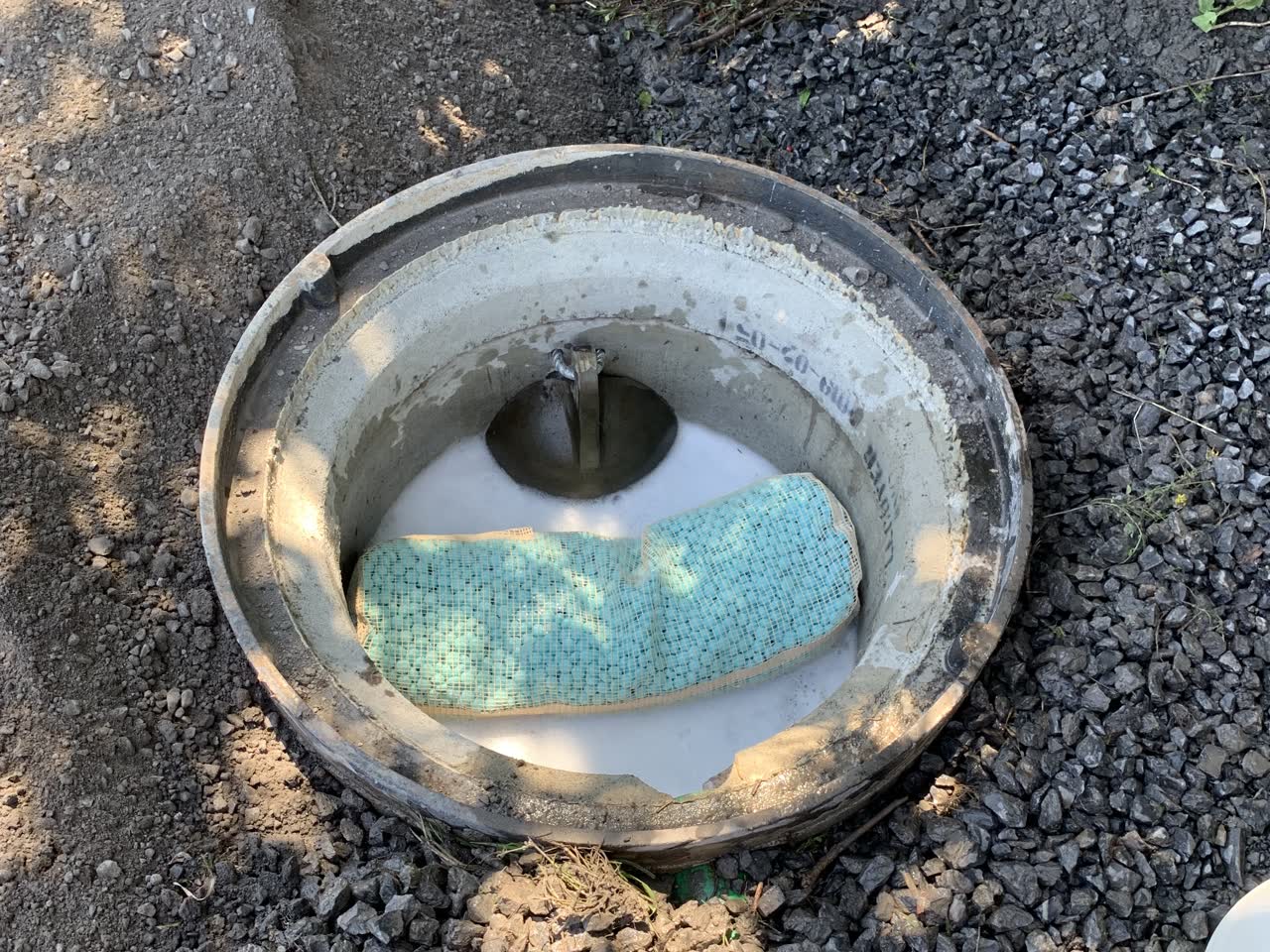
Drawing and installation photo from RHST field deployments. No endorsement by Parks Canada or the Government of Canada is implied.
The treatment process integrates into stormwater and groundwater management systems at municipal, industrial and commercial scale. Additional municipal pilots are active, with further sites added and data published as written authorizations are granted.
For a utility, every litre kept in storage is a litre that doesn't have to be pumped, treated or bought again, and every hydrocarbon load kept out of the watershed is a liability avoided. RHST offers a low-maintenance tool, with no power and no moving parts, on both sides of that ledger.